Joining Forces to Build a Smart Future: HKCRC and CSCEC Hong Kong Sign Strategic Cooperation MOU
Aug 18

On August 11, 2026, at China Overseas Building in Wan Chai, Hong Kong, a red backdrop emblazoned with the words "HKCRC-CSCEC Hong Kong MOU Signing Ceremony" stood prominently in the venue. On this day, the Hong Kong Centre for Construction Robotics (HKCRC) and China State Construction Engineering Corporation (CSCEC) Hong Kong officially signed a Memorandum of Understanding (MOU), followed by a nearly three-hour in-depth strategic dialogue on the future of Hong Kong's technology innovation and smart construction.
From R&D to real-world application, from talent to industry—this MOU paves the way for bringing technology to life on actual job sites. This was no ceremonial handshake; it was a mutual commitment to Hong Kong's real economy, the Northern Metropolis, and the future of the construction industry.
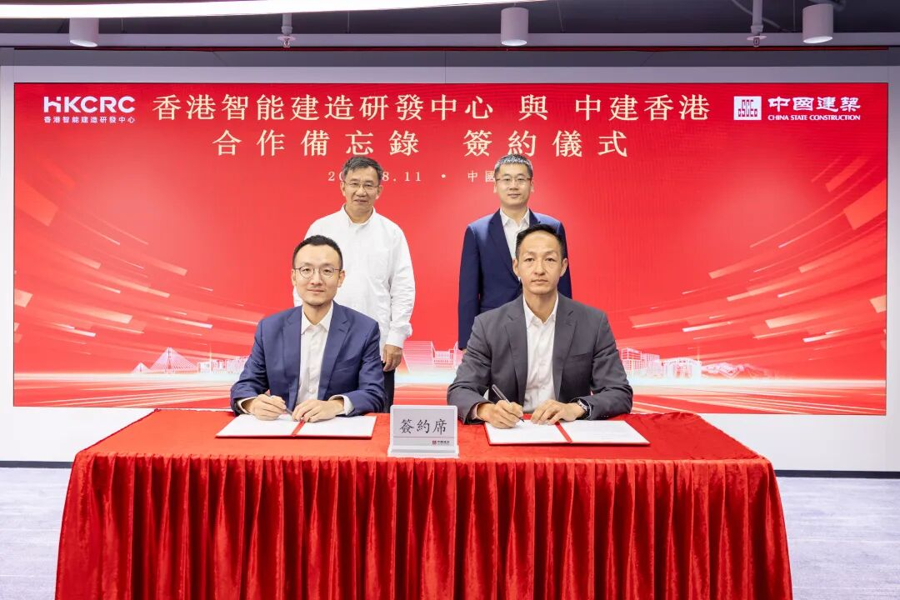
At the signing ceremony, representatives from both sides formally signed the MOU at the signing desk. The signing marks a significant milestone—transitioning HKCRC's collaboration with CSCEC Hong Kong from sporadic project-based engagements to a comprehensive, institutionalised, and long-term partnership. Together, the two parties will explore the complete pathway for smart construction to take root in Hong Kong, focusing on industrial upgrading, on-the-ground implementation, and talent development.
Representing HKCRC at the ceremony were Professor Li Zexiang, Director of HKCRC, Professor at HKUST, and Founder of XbotPark, along with Dr. Liang Haobo, Deputy Director of HKCRC, and other core team members. CSCEC Hong Kong was represented by Senior Vice President of China State Construction International Holdings Zhang Jie, Chief Engineer and Deputy General Manager of CSCEC Hong Kong Shao Ruizhe, Assistant General Manager Shi Jun, and other key leaders. One team specialises in smart construction R&D and tech incubation; the other holds extensive major project execution experience in Hong Kong and the Greater Bay Area. At this moment, they came together.
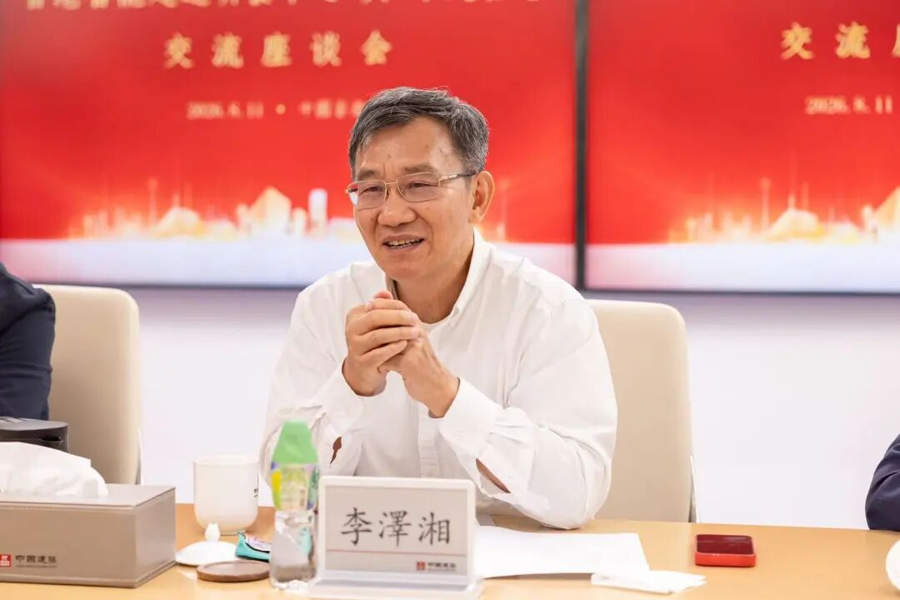
During the discussion, Professor Li opened with a comparative analysis of Hong Kong, Shenzhen, and Singapore: Singapore's GDP is now nearly double that of Hong Kong, while Hong Kong's real economy accounts for only about 2.6% of its GDP. Although the government-funded Science Park and Cyberport have incubated numerous enterprises, the conversion efficiency in terms of output, employment, and tax revenue still has considerable room for improvement.
"Hong Kong is holding a very good hand," Professor Li remarked. In his view, the key to breaking the impasse lies in strengthening advanced manufacturing and the real economy. A clear target was articulated during the meeting: by 2040, Hong Kong's re-industrialisation should account for 10% of GDP, corresponding to approximately HK$1.4 trillion in output value—with the Northern Metropolis serving as the primary zone for realising this goal. Smart construction and the coastal marine economy were identified as Hong Kong's two most promising sectors for strategic focus.
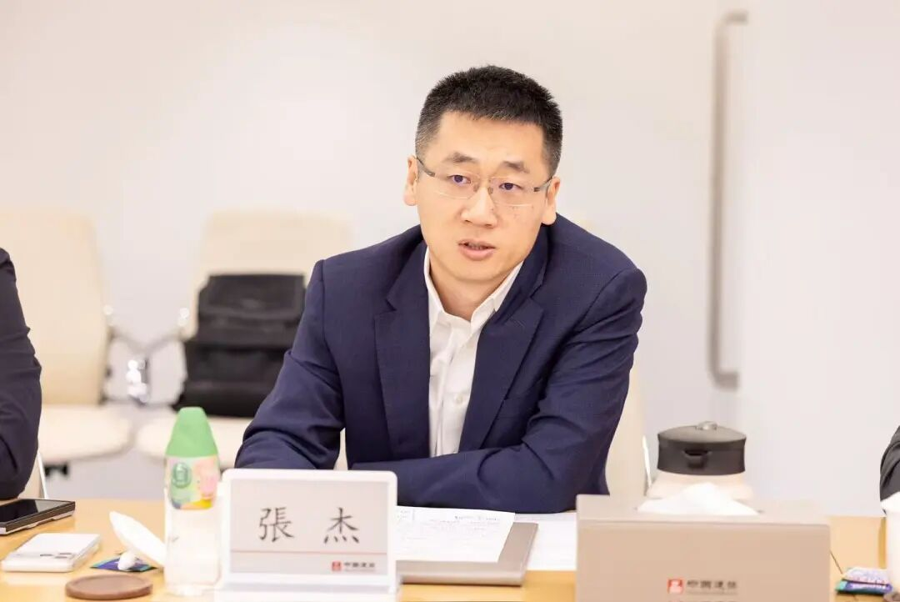
While Professor Li addressed the broader landscape of Hong Kong's innovation ecosystem, CSCEC Hong Kong approached the discussion from the perspective of industry transformation, sharing both opportunities and challenges facing the engineering sector in the AI era. As a leading contractor deeply rooted in Hong Kong, CSCEC Hong Kong distilled its core objective for this partnership into a single mission: using technology to address industry pain points. The company set three specific goals: first, enhancing safety and quality to uphold industry standards; second, reducing costs and improving efficiency to solidify market position; and third, developing a "third growth curve" by establishing differentiated competitive advantages in new blue-ocean markets. CSCEC Hong Kong hopes to leverage the vision and resources of the HKCRC team to empower the company in solving real-world problems.
Looking toward the Northern Metropolis, CSCEC Hong Kong identified three key opportunities: Hong Kong's first five-year plan is accelerating the city's alignment with national development priorities, significantly improving the efficiency of major project delivery, while the Northern Metropolis urgently needs new industries to transform Hong Kong's current industrial structure. CSCEC Hong Kong hopes to learn from HKCRC's methodology for tech-driven transformation—including new organisational structures, incentive mechanisms, and performance evaluation systems—to genuinely unlock employees' innovative potential.
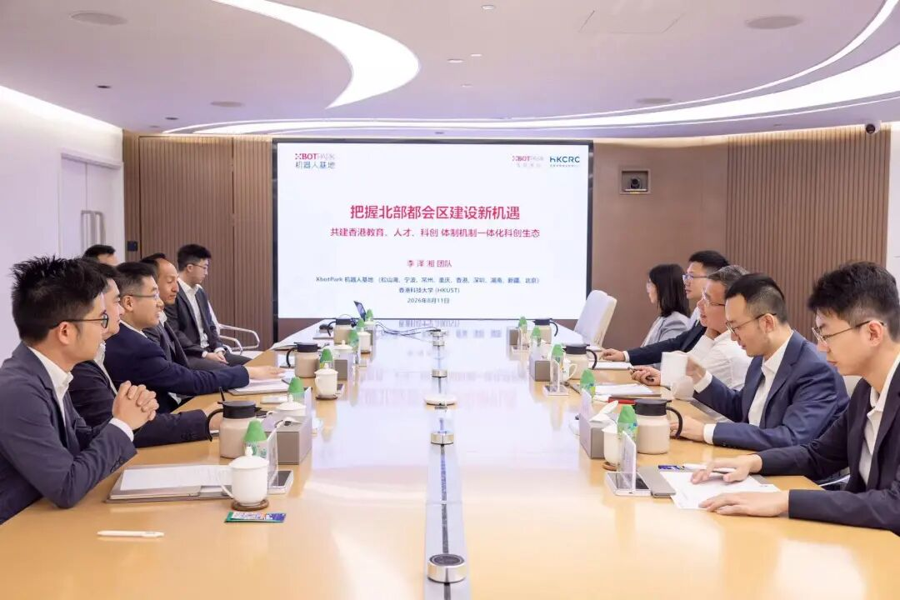
Great technology always emerges from real-world scenarios. One of the most grounded segments of the seminar saw both sides engage in an in-depth exchange on the practical needs and pain points of Hong Kong construction sites, exploring how smart construction can tangibly empower on-site operations. Professor Li repeatedly emphasised a core philosophy: technology divorced from real-world scenarios often struggles to gain traction; only by starting from the genuine difficulties on construction sites can innovation find its true target and technology translate into productivity. Following this line of thinking, both parties zeroed in on the most pressing challenges facing the industry—how to uphold safety and quality standards, how to reduce costs and boost efficiency through automation and intelligence while freeing workers from heavy and hazardous tasks, and how to leverage new technologies to expand the industry's third growth curve.
What gives this consensus even greater weight is the remarkable complementarity of both parties' capabilities. HKCRC, backed by the XbotPark innovation ecosystem, possesses a complete system spanning R&D, incubation, and commercialisation, along with a rich reservoir of smart construction technologies. CSCEC Hong Kong, with years of deep roots in Hong Kong and the Greater Bay Area, commands extensive major project experience and real construction sites, alongside deep expertise in innovative construction methods such as Modular Integrated Construction (MIC). On one side sits cutting-edge R&D capability; on the other, real industrial scenarios and execution strength. At this moment, they converge—R&D is no longer an abstract pursuit in the lab, and industry needs no longer struggle to find technological solutions.
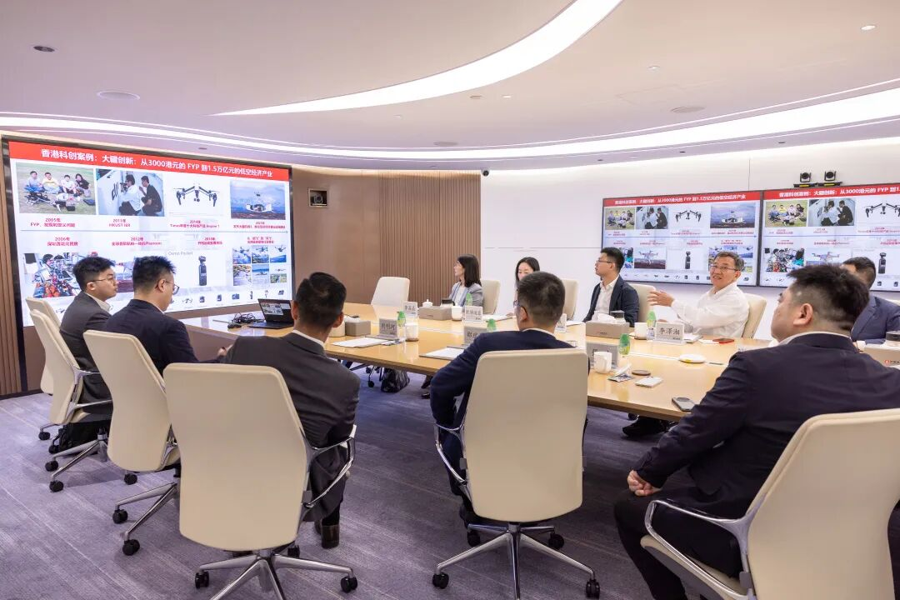
For Hong Kong's construction industry, this "R&D + industry" combination represents precisely the force needed to transition from traditional methods to smart construction. Both sides agreed that the next step is to translate this consensus into verifiable, replicable, and scalable concrete outcomes—to make smart construction truly operational on Hong Kong's job sites.
The outcomes of the discussion crystallised into a series of actionable arrangements. The two parties will jointly organise a Smart Construction Entrepreneurship Bootcamp: rigorously selecting students from Hong Kong and beyond majoring in electronics, civil engineering, mechanical engineering, and related fields—aiming to recruit approximately 20 participants to form five interdisciplinary entrepreneurial teams. The four-day agenda will include site pain-point sharing, on-site scenario research, collaborative solution development, and expert roadshows. Outstanding teams may directly enter the incubation pipeline, and core members will have the opportunity to receive full-time job offers or places in HKUST's joint entrepreneurial master's programme.
The longer-term blueprint points toward the Northern Metropolis. Leveraging CSCEC Hong Kong's project resources in the Northern Metropolis, both parties plan to jointly establish a smart construction industrial park, introducing state-key laboratories and university collaboration platforms to build end-to-end capabilities spanning R&D, pilot testing, and scenario validation. The goal is to reduce Hong Kong's overall construction costs by 10% to 20% within a decade, covering a trillion-dollar construction market. To this end, a joint special working group will be established to translate the meeting's consensus into concrete action, step by step.
The seminar concluded on a high note. All members of both teams gathered for a group photo in front of the red backdrop—capturing not just a successful signing, but a shared conviction: Let technology take root in industry, let talent step onto the job site, and let smart construction be truly built into Hong Kong's future.



Get In Touch
Have questions or want to explore collaboration? Reach out to our team and let’s build the future of construction together.