Innovation and Technology Commission Delegation Visits HKCRC to Explore Smart Construction Technology Progress and Innovative Talent Development
Aug 19
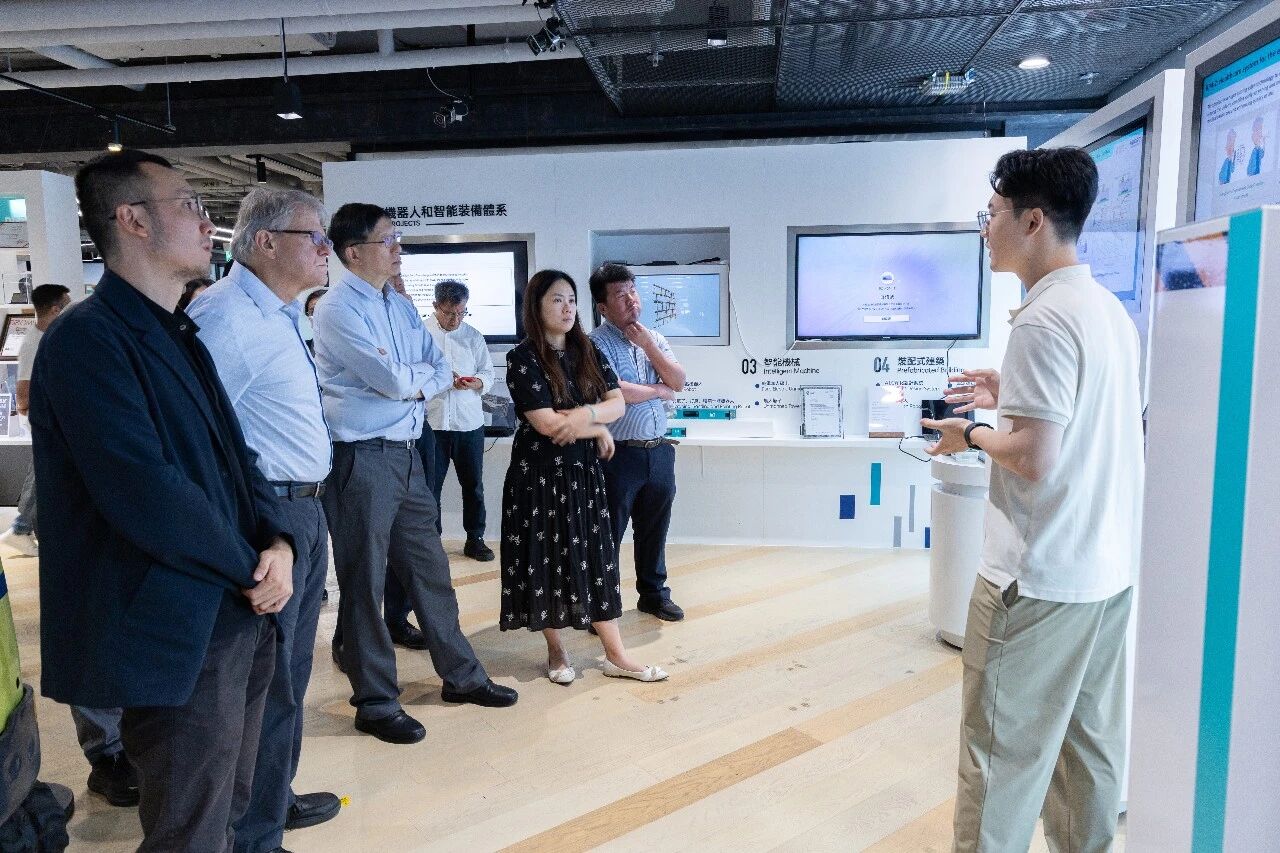
On August 13, 2026, a delegation led by Professor Charles Surya, Scientific Advisor of the Hong Kong Innovation and Technology Commission (ITC), visited the Hong Kong Centre for Construction Robotics (HKCRC) for its annual review. Professor Li Zexiang, Director of HKCRC, joined by renowned scholars including Professor Roberto Horowitz and Professor Lin Liwei from the University of California, Berkeley, Professor Luo Yuanxin from Chongqing University, and Professor Zhang Qian from the Hong Kong University of Science and Technology, engaged in in-depth discussions on smart construction technology progress, project commercialisation, and the development of innovative entrepreneurship education systems.
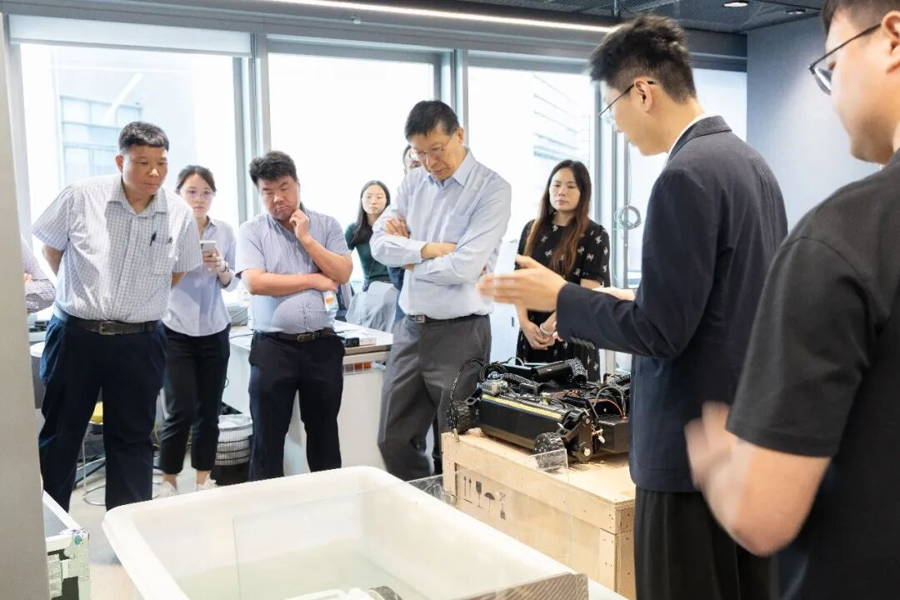
During the visit, the ITC delegation toured the centre's exhibition hall, observing live demonstrations of multiple technologies including the AI Tower Crane System, Rebar-Tying Robot, Water Tank Cleaning Robot, and AI 3D Measurement Scanner—gaining a comprehensive understanding of the centre's R&D and application progress in smart construction equipment.
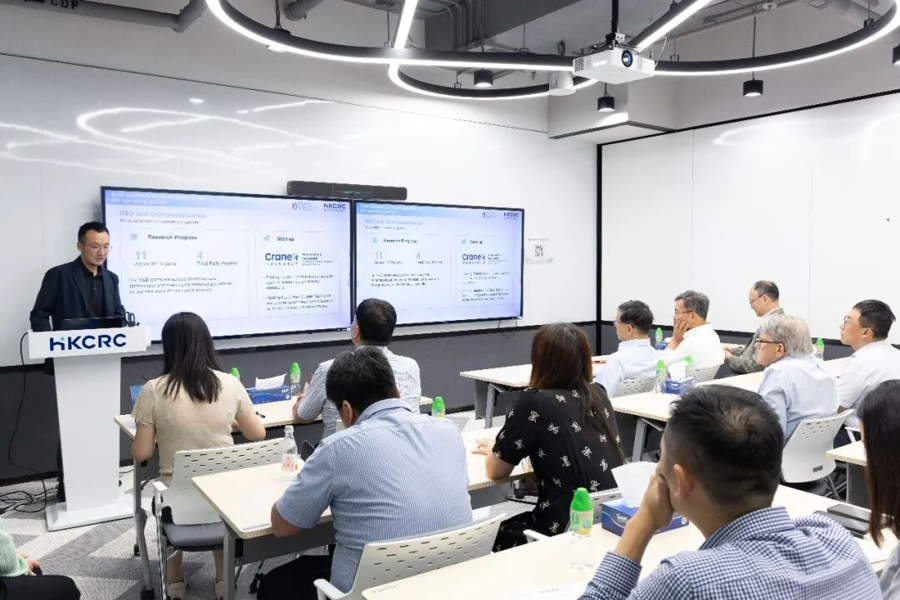
The HKCRC team then presented the centre's 2025–2026 annual progress to the ITC delegation, covering R&D breakthroughs, project commercialisation, talent development, and ecosystem expansion. Over the past year, the centre has launched 11 projects and signed strategic cooperation agreements with key industry stakeholders, including the Hong Kong Housing Bureau and China State Construction Group. Key technical achievements include:
Intelligent Lifting Machinery System: Completed prototype design for 500-metre-class long-distance 3D detection and tracking; AI safety model achieves 95% detection accuracy for personnel and hooks, and 92% positioning accuracy for mechanical equipment—fully compliant with the lifting safety policy requirements of the Hong Kong Construction Industry Council (CIC);
Autonomous Excavator System: Completed core R&D including multi-sensor fusion real-time positioning, dynamic digital twin environment construction for construction sites, and semantic segmentation for soil condition recognition; also developed a simulation platform capable of mapping real-world operating conditions;
Old Building Inspection and Maintenance Project: Developed UAV inspection path-planning solutions covering target areas; uses multimodal cameras to identify building leaks and structural defects, automatically generating location reports; related technology received a Gold Medal at the Geneva International Exhibition of Inventions;
Cargo Hold Cleaning Robot: Developed sensing systems adapted to foggy and underwater scattering scenarios, and designed a magnetic robot platform capable of climbing vertical steel surfaces; can use laser beams to remove rust from steel surfaces.
Multiple technologies are accelerating their transition from laboratory to job site and market. Centre leadership indicated that the coming year will focus on promoting independent incubation of core teams and early-stage financing, accelerating global talent acquisition and the scaled development of industry-university-research projects, and driving the formation of a commercialisation closed loop.
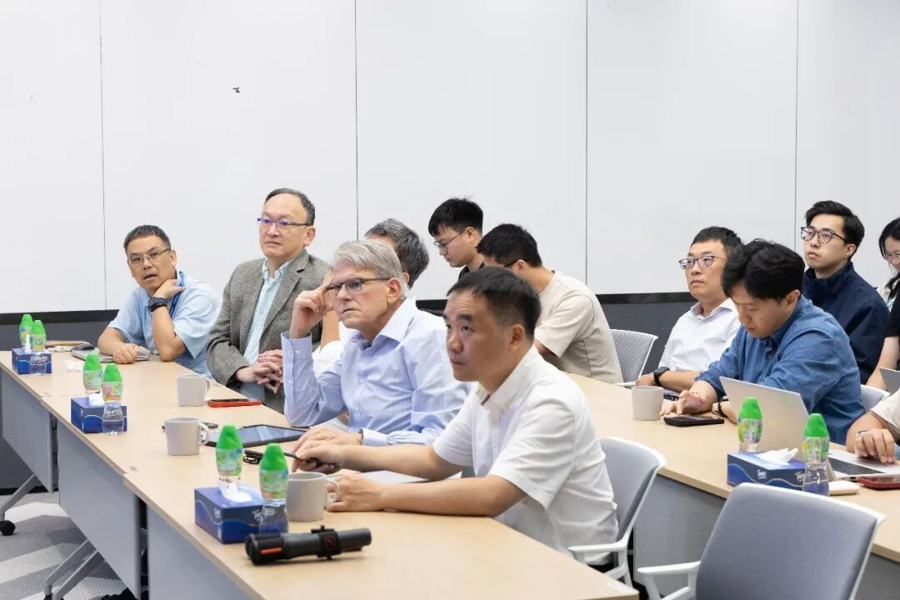
Alongside the ongoing commercialisation of technological outcomes, innovative talent development models emerged as another key topic of discussion. Professor Luo Yuanxin, Party Secretary and Executive Dean of the National Excellent Engineers College at Chongqing University, delivered a special presentation on entrepreneurship education system development, systematically introducing the college's practical explorations and training models.
Guided by industry demand, the college breaks down disciplinary barriers, advancing the interdisciplinary "AI + Mechatronics" curriculum while establishing a dual-track training system encompassing both "entrepreneurship-oriented" and "professional engineer-oriented" pathways. Through initiatives including laboratory development, shared factory construction, and early-stage exploration funding, the college provides comprehensive support and risk mitigation for student entrepreneurial ventures. To date, multiple high-quality projects have emerged from graduating student teams, with some achieving financing and sales at the tens of millions to hundreds of millions of RMB level. Graduates pursuing the non-entrepreneurial track also command starting salaries significantly higher than those trained through traditional models, with many securing core positions at leading technology companies.
Additionally, both sides exchanged views on key challenges and solutions in the student entrepreneurship process, as well as the direction of iterative development for innovation education systems, and discussed student development safeguards under the entrepreneurship-oriented training model.
This visit further deepened the collaborative synergy among government, research institutions, and universities in the field of smart construction, injecting new momentum into both the deployment of technological outcomes and the cultivation of innovative talent.



Get In Touch
Have questions or want to explore collaboration? Reach out to our team and let’s build the future of construction together.