Mini Camp Wrap-Up: 4 Days, 6 Teams, Turning Construction's "Real Problems" into "Real Solutions"! Construction Embodied Intelligence Mini Camp Concludes Successfully
Sep 03
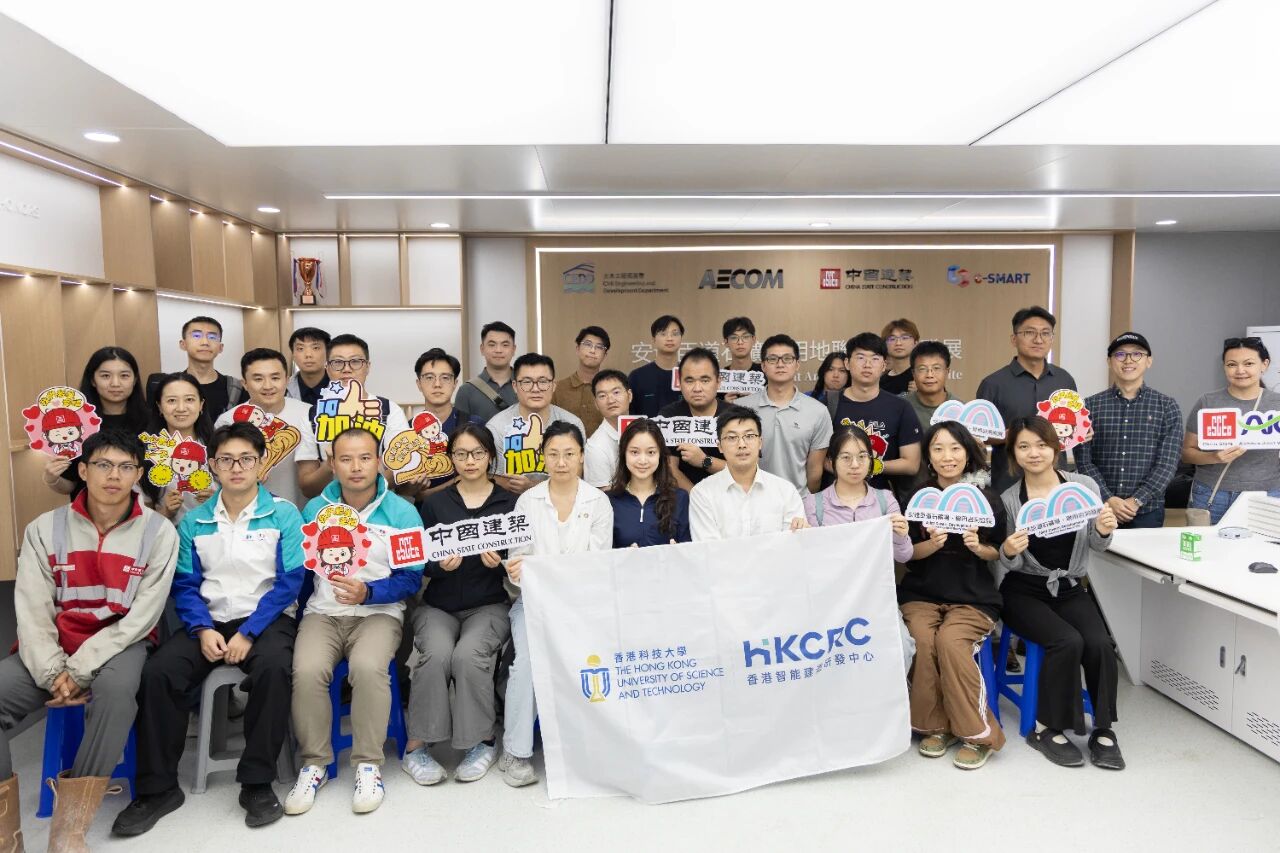
What the intelligent transformation of the construction industry often lacks is not technology, but an understanding of real site conditions. The Hong Kong Centre for Construction Robotics (HKCRC)—a premier InnoHK innovation platform led by Professor Li Zexiang—is committed to injecting advanced technologies such as robotics and AI into the traditional construction industry. This time, HKCRC joined forces with CSCEC Hong Kong to co-host the "Construction Embodied Intelligence Mini Camp"—the former contributing technology and incubation ecosystems, the latter opening up industrial scenarios and frontline experience—together bringing innovation back to where it starts: the construction site.
The camp was based at HKCRC's headquarters. What participants saw here was not only incubated embodied intelligence construction products, but also a viable pathway to deployment: good ideas find support, and the conditions to carry them forward exist.
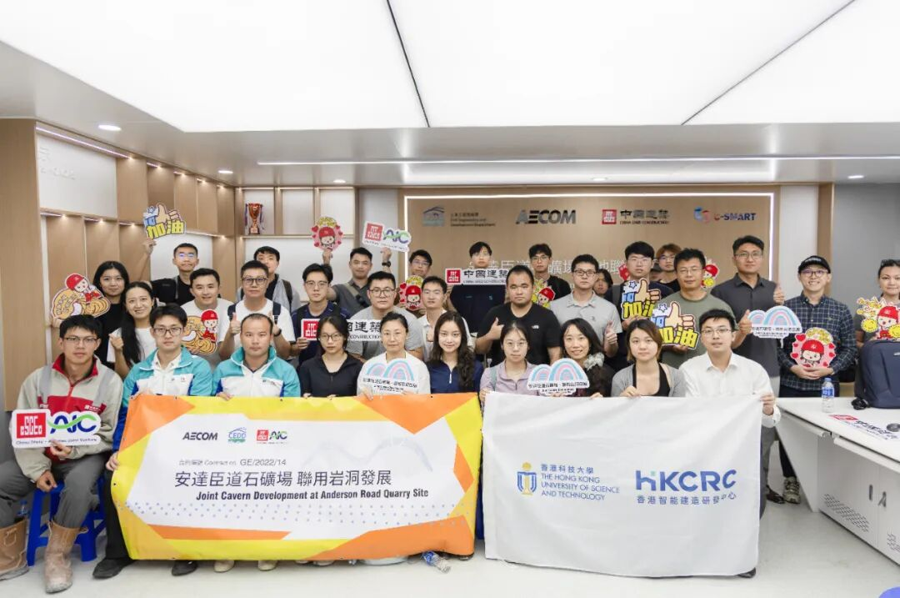
With the joint support of HKCRC and CSCEC Hong Kong, 30 interdisciplinary participants spent four days and three nights immersed in real construction sites, confronting frontline pain points, refining product definitions through design thinking, and ultimately delivering a resounding answer: "Defining problems on site, delivering solutions in real scenarios."
Day 0
Pre-Camp "Survey": CSCEC Team Takes the Lead, Eight Pain Points Unveiled
On the Friday warm-up day before the camp officially began, HKCRC Marketing Director Li Yonggang opened with "Opportunities and Challenges in Today's Construction Industry," laying out the sector's challenges directly before every participant. The atmosphere then reached its peak as General Manager Shao Ruizhe, Deputy General Manager of CSCEC Hong Kong and Chairman of Haihong Technology Co., Ltd., arrived with his team.
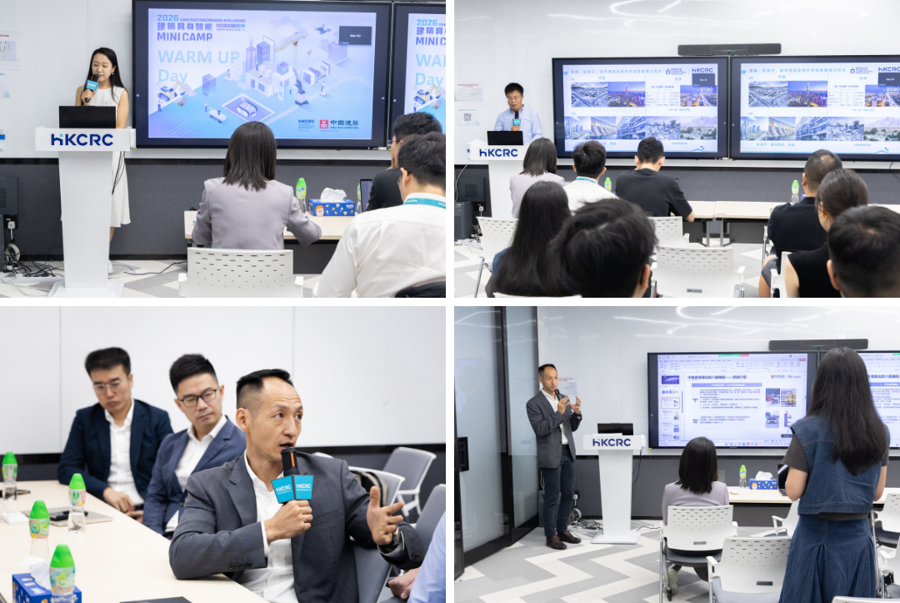
Drawing on CSCEC Hong Kong's in-depth research across multiple construction sites in the first half of the year, General Manager Shao systematically presented eight pain points and eight needs with clear scenarios and market potential. Three core members of CSCEC Hong Kong Haihong Company then offered guidance from their respective business perspectives—covering the natural alignment between construction and entrepreneurship, career transition experiences, and product differentiation—calling on both sides to jointly practice and refine truly implementable innovative solutions through this camp.
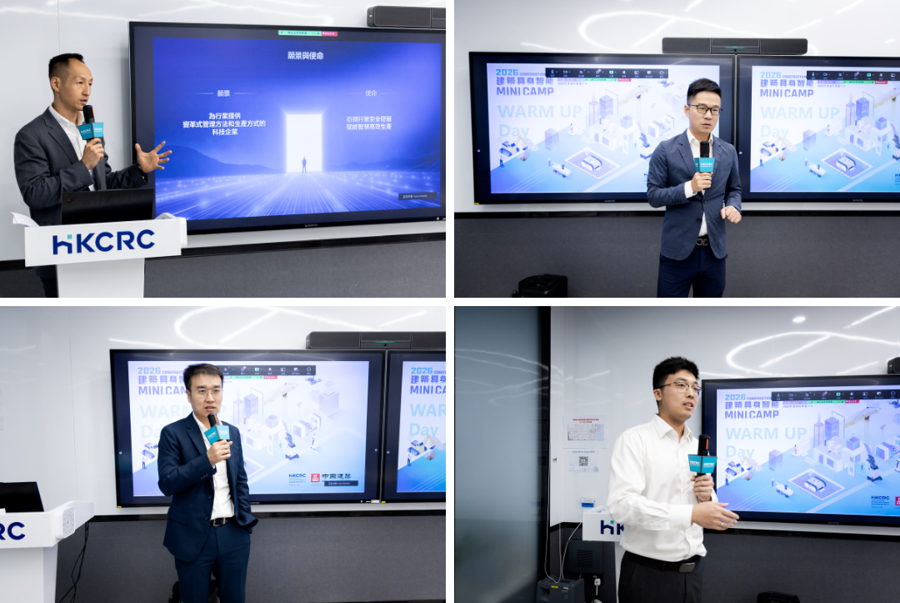
This face-to-face, in-depth dialogue not only brought "seeing the real construction industry" to fruition ahead of schedule, but also forged a shared commitment to "uncovering viable solutions," laying a pragmatic and solid foundation for the four days and three nights ahead.
Day 1
Foundational "Groundwork": Innovation Ecosystem Orientation, Design Thinking Empowerment
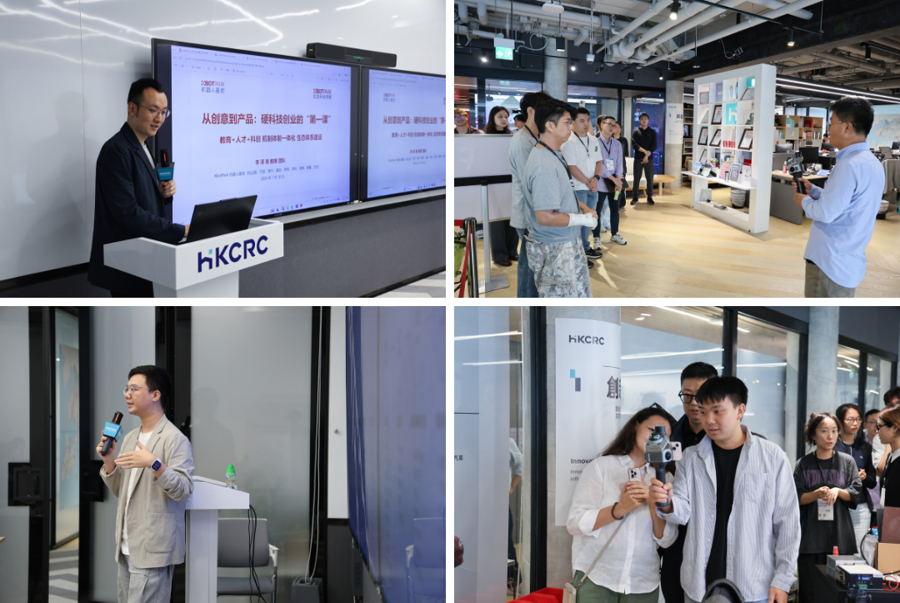
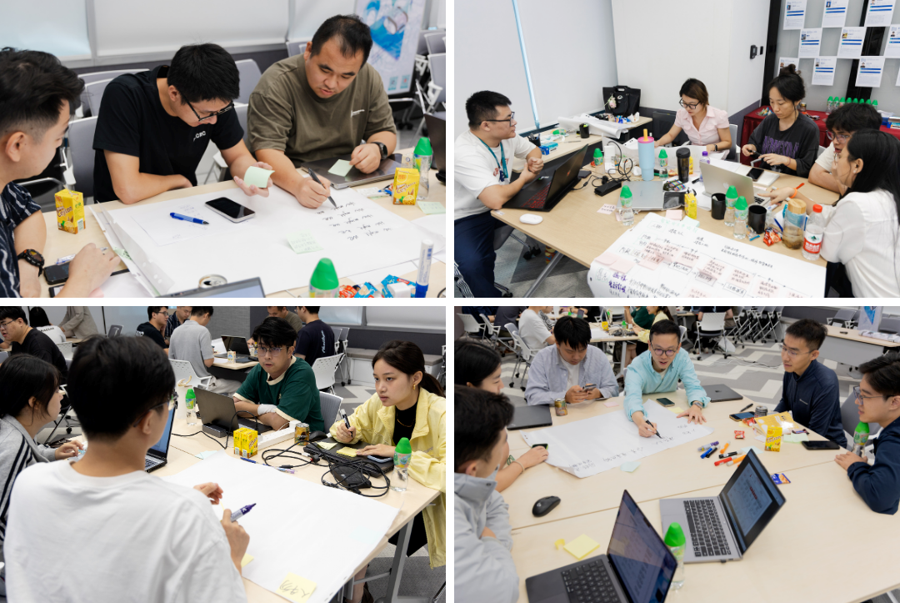
Day one was packed with learning. Dr. Liang Haobo, Deputy Director of HKCRC, systematically introduced the centre's "education + talent + tech innovation" ecosystem; Marketing Director Li Yonggang led participants on a tour of the exhibition area for an up-close encounter with embodied intelligence construction products. Following ice-breaking and team formation, Product Manager Zuo Kui delivered a session on Design Thinking and the Double Diamond Model as the core methodology, using the IoT Smart Ruler for Construction Quality Inspection as a real-world case study to equip participants with innovation tools grounded in user needs. The integration of theory, tools, and hands-on practice laid the groundwork for the "divergence to convergence" journey ahead.
Day 2
Down to the "Ground": Stepping into Real Scenarios, Feeling the Pulse of Construction
Theoretical reasoning ultimately must stand the test of real-world scenarios. On day two, participants turned their attention from methodology to physical spaces, delving into technology exhibition halls and frontline construction sites to experience the vibrant landscape of modern smart construction up close.
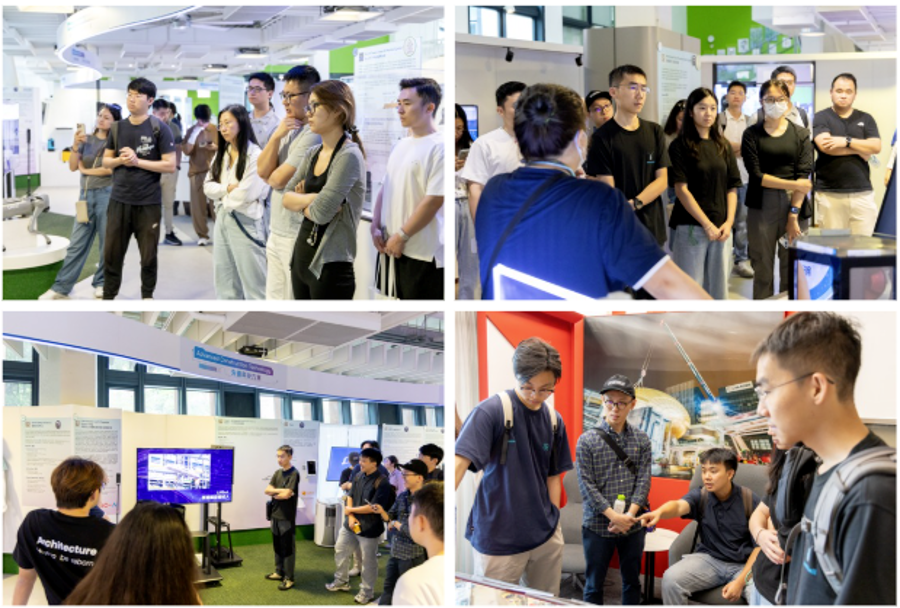
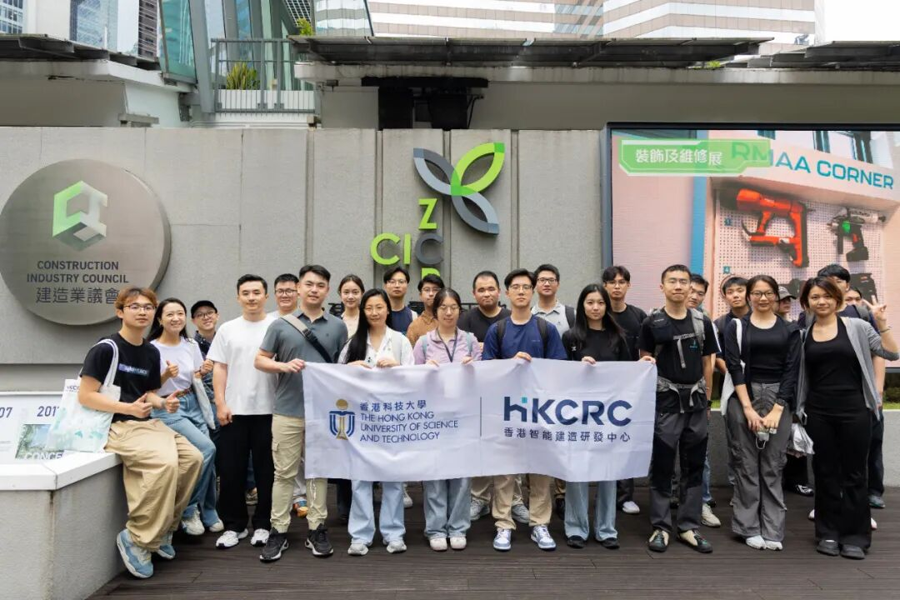
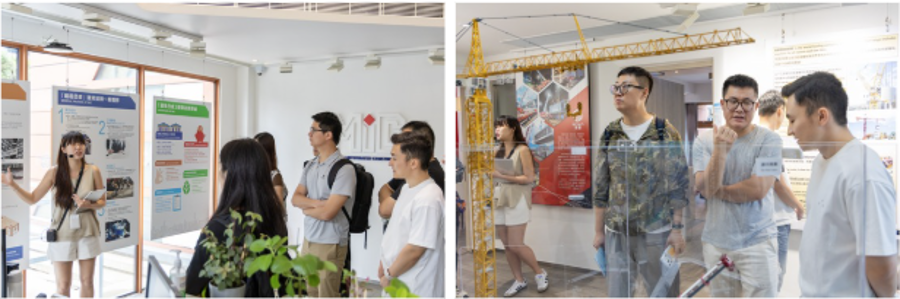
In the morning, participants arrived at the Construction Industry Council Zero Carbon Park. Guided by the expert team, they visited the Construction Innovation and Technology Application Centre and the Modular Integrated Construction (MiC) Resource Centre. From real-world applications of various innovative construction robots to breakthrough practices in how MiC enhances quality and efficiency across the building lifecycle, the engineering deployment of cutting-edge technologies was brought to life. This modern construction paradigm—deeply integrating technological innovation with prefabrication—gave participants a macro yet tangible understanding of the industry.
In the afternoon, participants moved on to the Anderson Road site for on-site research and visits.
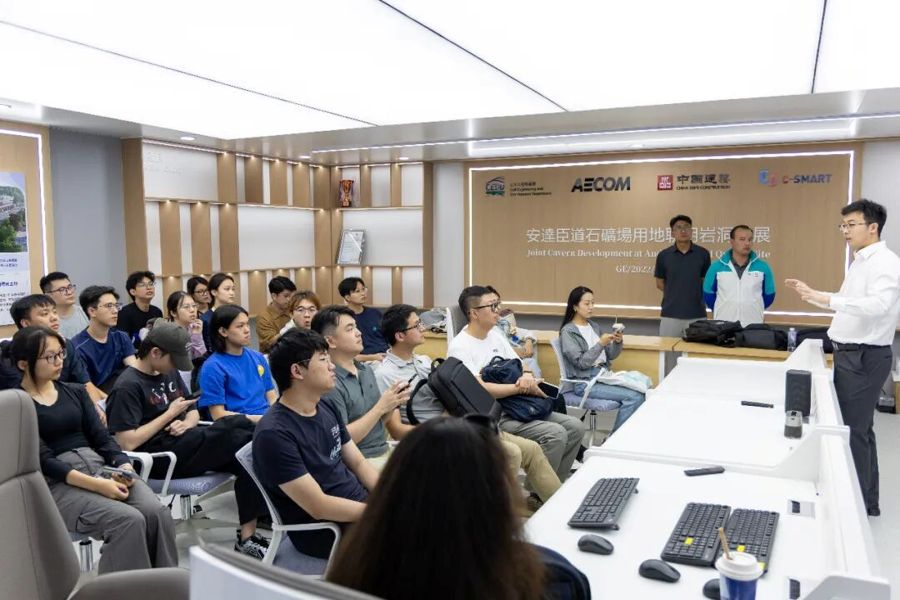
Donning hard hats, participants stepped into the actual construction site for in-depth investigation. In the project work zones, they observed firsthand the scheduling and operation of intelligent equipment such as AGVs (Automated Guided Vehicles); they also conducted face-to-face interviews with frontline workers.
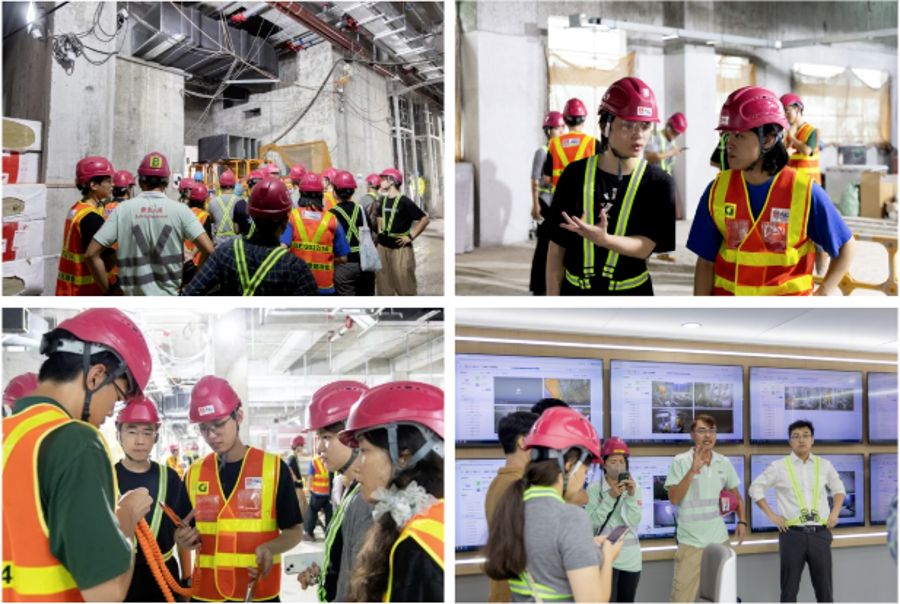
From the technical architecture of the machinery to workers' actual user experiences, every on-site detail sparked deep reflection: product innovation must never stop at laboratory development—it must truly address real-world scenarios and users' genuine pain points.
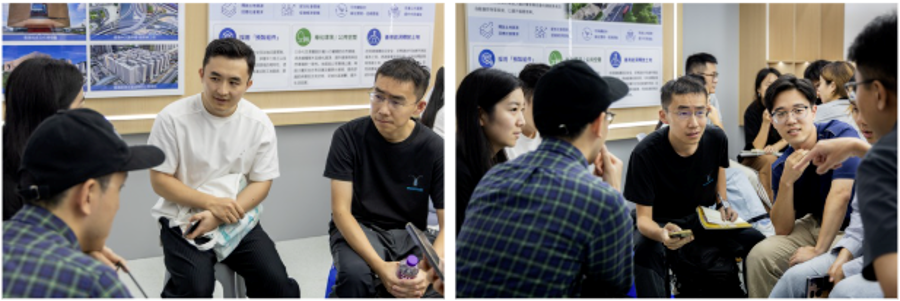
Day 3
"Pouring" the Solution: Focusing Needs, Finalising the Solution Framework
Thanks to CSCEC Hong Kong's early directional groundwork and on-site research support, each team started with a clear sense of direction and the ability to pivot quickly. On one hand, the eight business pain points and needs General Manager Shao had presented during the warm-up day helped many teams anchor their entry points early on; on the other, the previous day's site visits and interviews brought participants face-to-face with frontline stakeholders—workers, contractors, engineers, and more. Direct feedback from the field drove teams to adjust their directions based on actual needs: even when initial solutions deviated from real pain points, rapid iteration brought products closer to the ground.
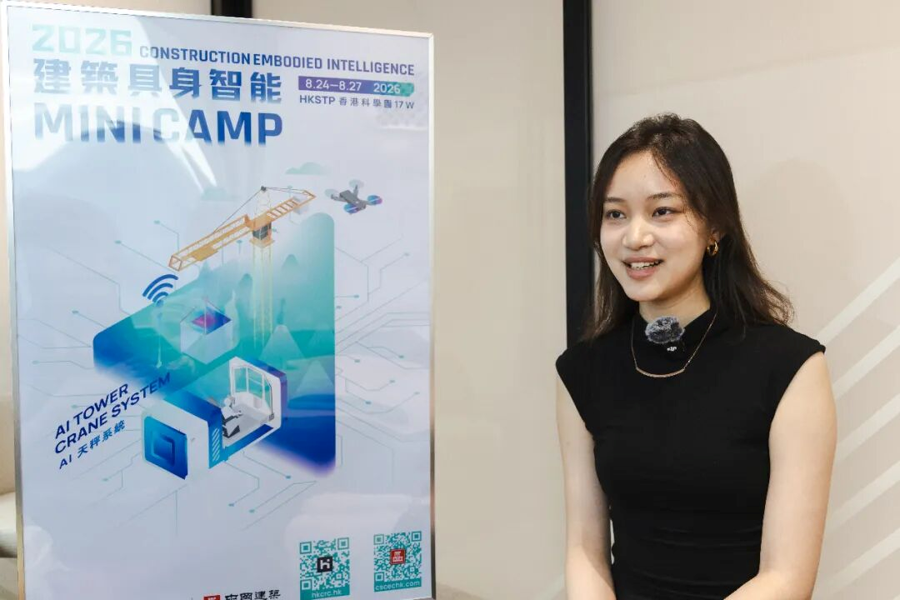
Yang Chenlu from the "VoltVan" team felt this deeply: "The site research gave us a more systematic way of thinking. We could see more clearly how existing workflows are formed, what users' real pain points are, and where the difficulties lie in the implementation system."
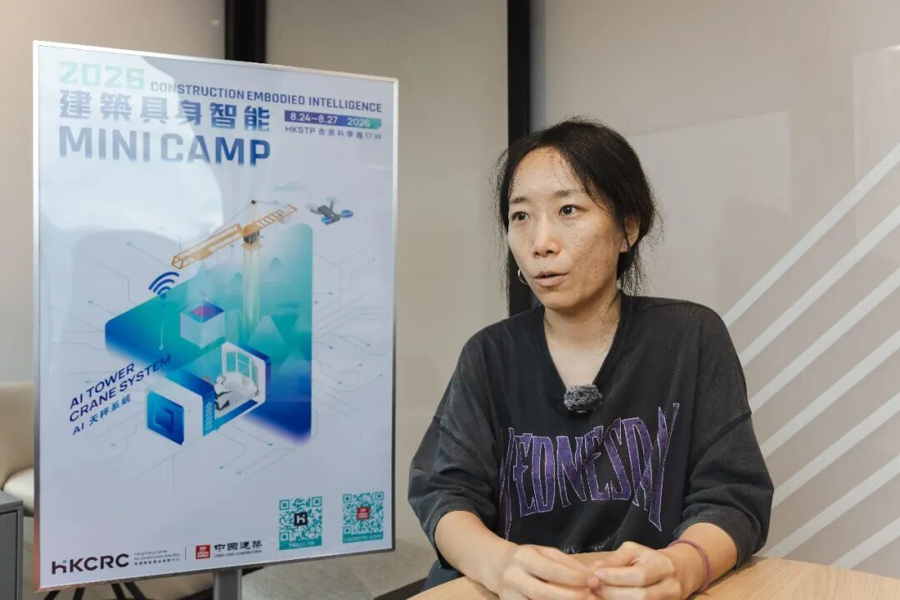
A similar shift occurred with the "PIG LAB" team. They initially focused on construction waste recycling, but after visiting sites they discovered that waste management on Hong Kong construction sites is well-regulated and orderly—their assumed pain point didn't exist. The team pivoted to one-on-one interviews with site managers and frontline workers, uncovering a real need: workers must clean concrete equipment pipes daily. If residual concrete isn't removed promptly, high-value pipes are scrapped. Manual cleaning requires hammering, which is noisy and unpleasant, and existing technologies can't address it efficiently. The team decisively redirected their focus to cleaning residual concrete blockages in pipes.
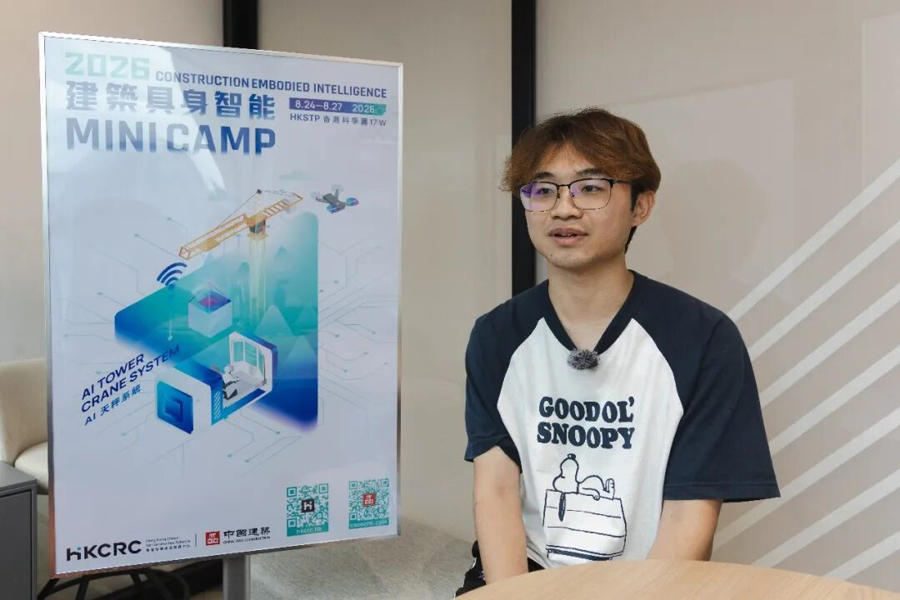
Xu Man from the "Construction Safety Perception" team similarly refined her understanding through conversations. Her initial focus on smart safety harnesses didn't fully align with reality: "The pain points we originally envisioned might only cover part of the picture. After Li Xiangcan from Haihong Company heard our proposal, he added several more pain points, helping us realise we could further expand our thinking. Now, we're focused on two core frontline issues: first, how to identify whether a worker is operating at height, and second, how to determine whether they are working or resting."
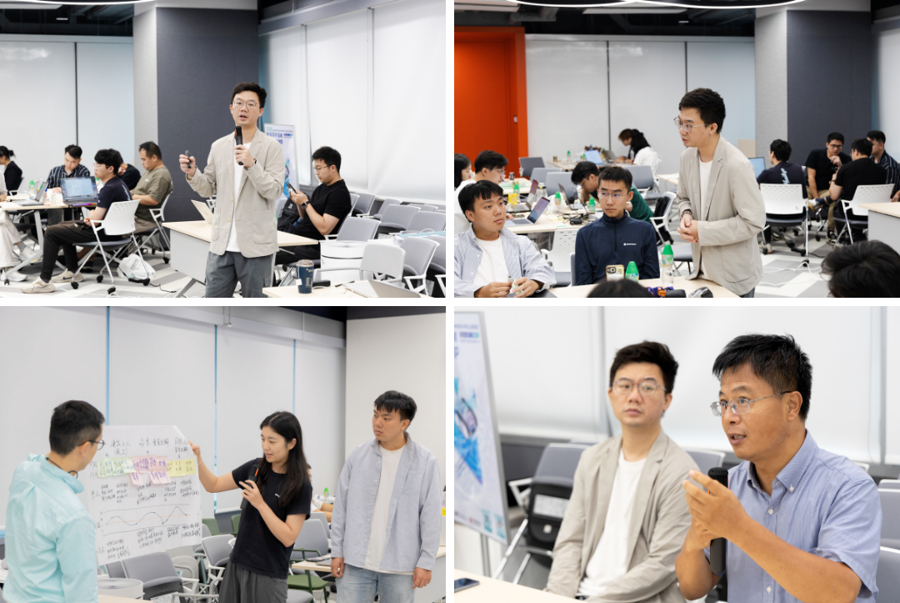
Armed with real problems brought back from the field, participants moved into a deeper methodological phase. In the morning, Product Manager Zuo Kui continued the Design Thinking curriculum, focusing on User Journey Mapping and the "How Might We" problem-definition method. During the subsequent hands-on session, each team presented their work in turn, with Marketing Director Li Yonggang and Zuo Kui providing professional feedback to help teams precisely frame problems and iterate solutions. Each round of presentation and feedback pushed teams to further clarify their thinking and address gaps.
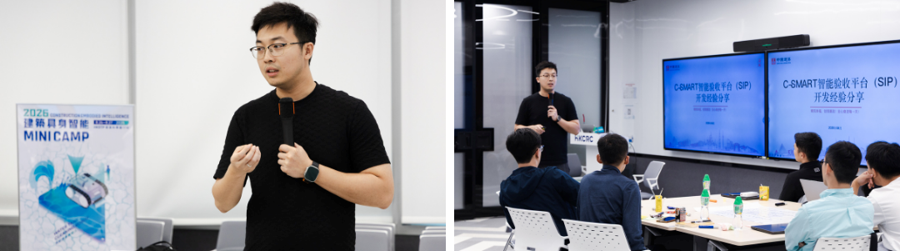
In the afternoon, Yang Jinze, Manager of the Innovation Business Department at CSCEC Hong Kong Haihong Company, delivered a session titled "C-SMART Smart Inspection Platform (SIP) Development Experience," drawing on project practice to outline viable pathways for entering the innovation space from the construction industry, followed by one-on-one Q&A with each team.
From debriefing the previous day's frontline feedback, to introducing methodological tools in the morning, to sharing practical experience in the afternoon—day three built momentum layer by layer. Through the progression of "review → structure → learn," participants transformed fragmented insights into systematic solutions. Each team's direction grew clearer, and solution refinement entered a high-efficiency phase.
Day 4
Final "Topping Out": Industry Experts Judge, Smart Construction Outcomes Unveiled
After several days of intense real-scenario insights and iterative solution development, the 2026 Construction Embodied Intelligence Mini Camp reached its final pitch session on the afternoon of August 27.
A distinguished panel of seven experts was invited to serve as the judging committee: General Manager Shao Ruizhe, Deputy General Manager of CSCEC Hong Kong and Chairman of Haihong Technology Co., Ltd.; Xu Peng, Operations Director of CSCEC Hong Kong Haihong Company; Guan Chao, R&D Director; Wang Ce, Head of Robotics; Yang Jinze, Manager of Innovation Business Department; along with HKCRC Marketing Director Li Yonggang and Project Manager Lü Zemin—together witnessing the deep convergence of cutting-edge technology and construction scenarios.
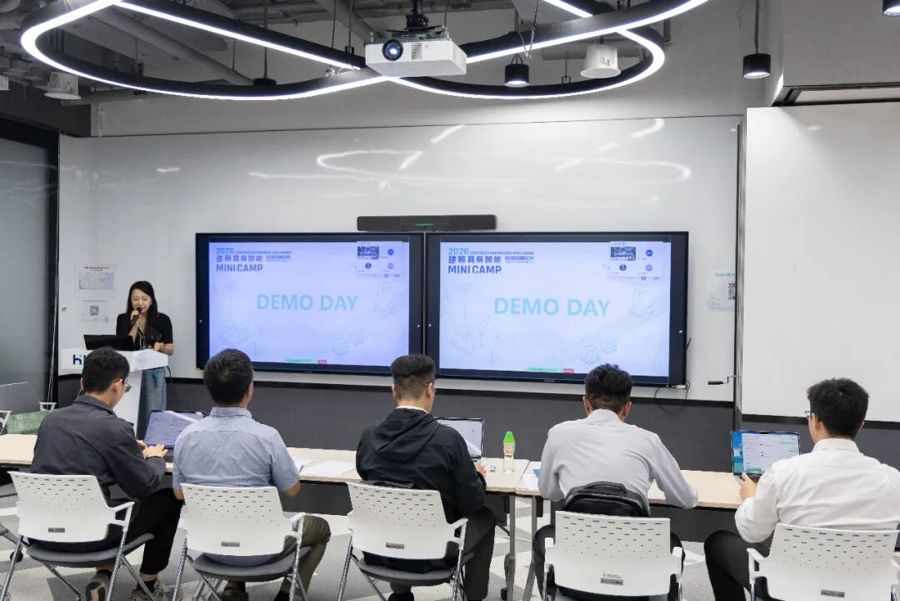
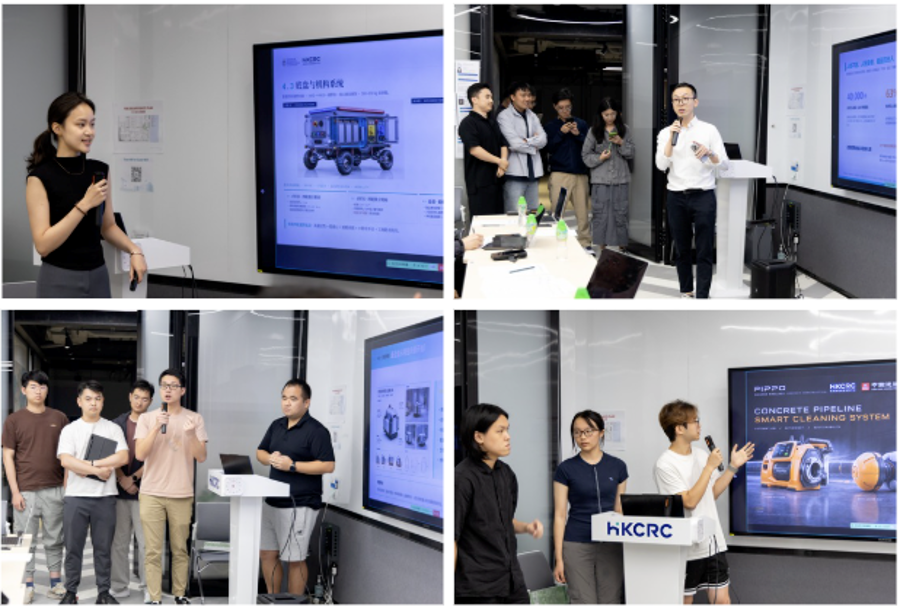
During the pitch session, each project team took the stage to present their technological breakthroughs and scenario-deployment solutions. Focusing on real pain points at construction sites, the teams delivered hard-hitting presentations spanning AI smart construction sites, mobile energy, intelligent pipeline cleaning, and smart logistics—each combining technical foresight with commercial viability.
The judging panel conducted in-depth questioning and professional evaluation across core dimensions including market potential, value proposition, technical feasibility, and business models.
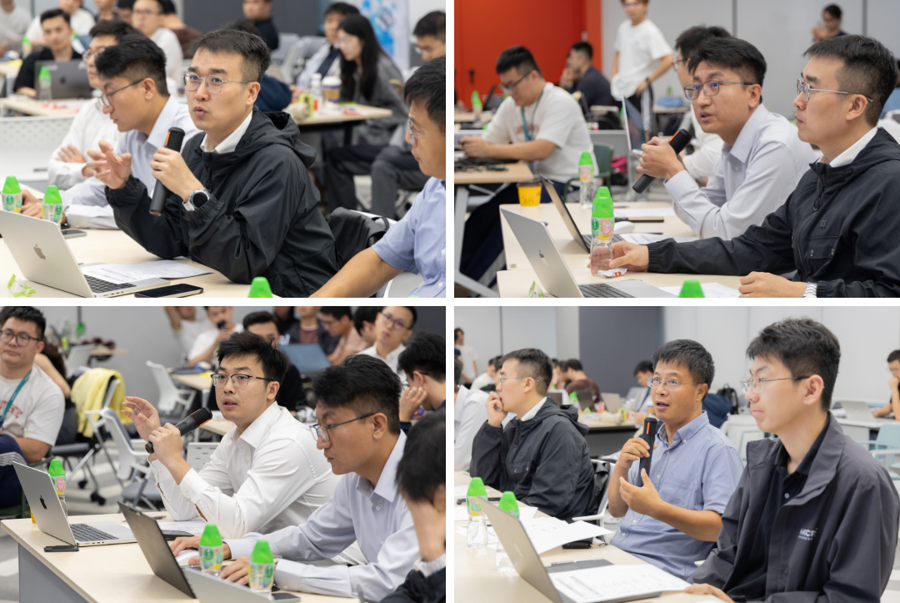
From precisely addressing scenario needs to rigorously scrutinising cost and reliability, this defence session was not only a comprehensive assessment of existing solutions but also a catalyst for industry-wide reflection on how embodied intelligence can truly take root in the construction sector. Through face-to-face technical debate and the collision of ideas, each team identified specific pathways for further technical and commercial refinement.
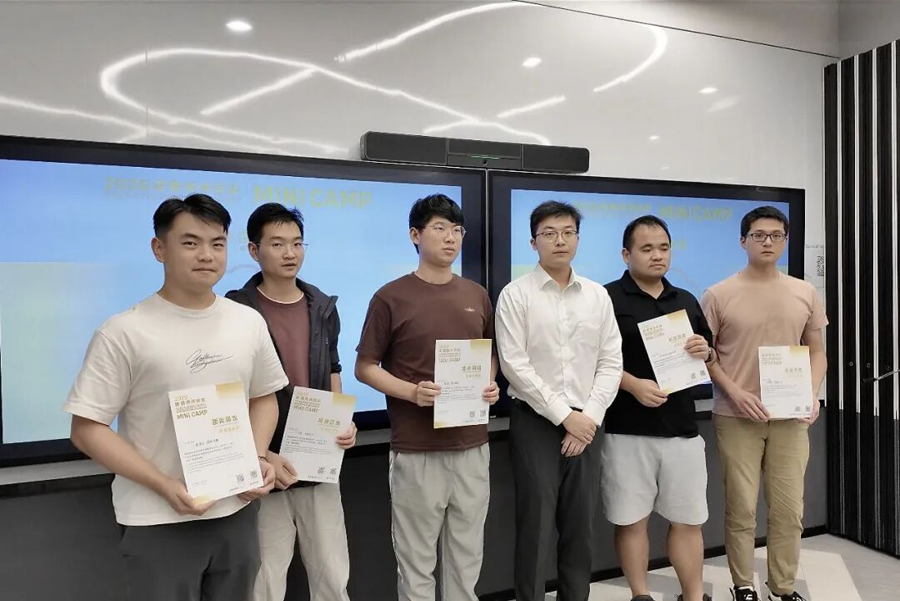
First Prize | World Model-Based Future Risk Simulation and Proactive Safety Decision Technology—AI Smart Construction Site System: Achieving closed-loop future risk simulation and proactive safety decision-making on construction sites
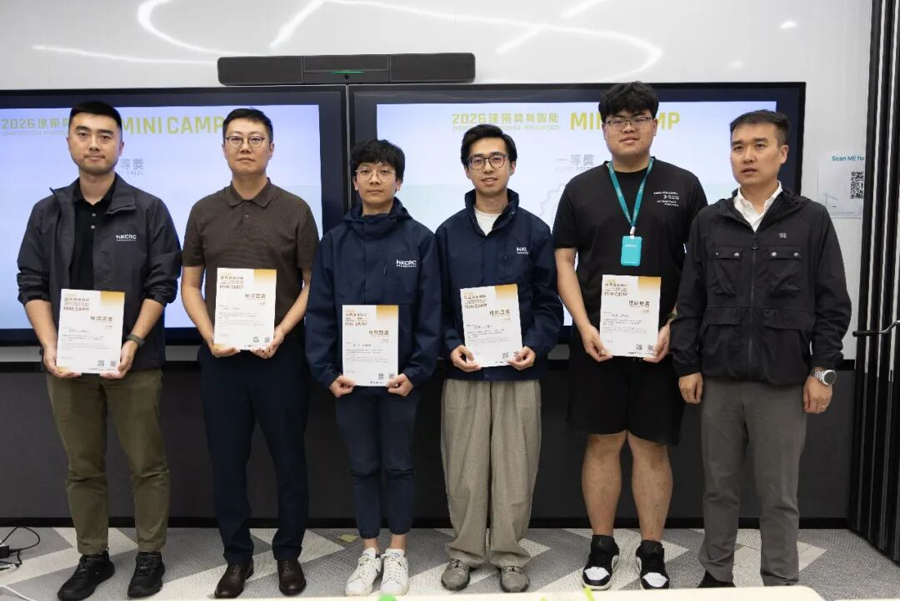
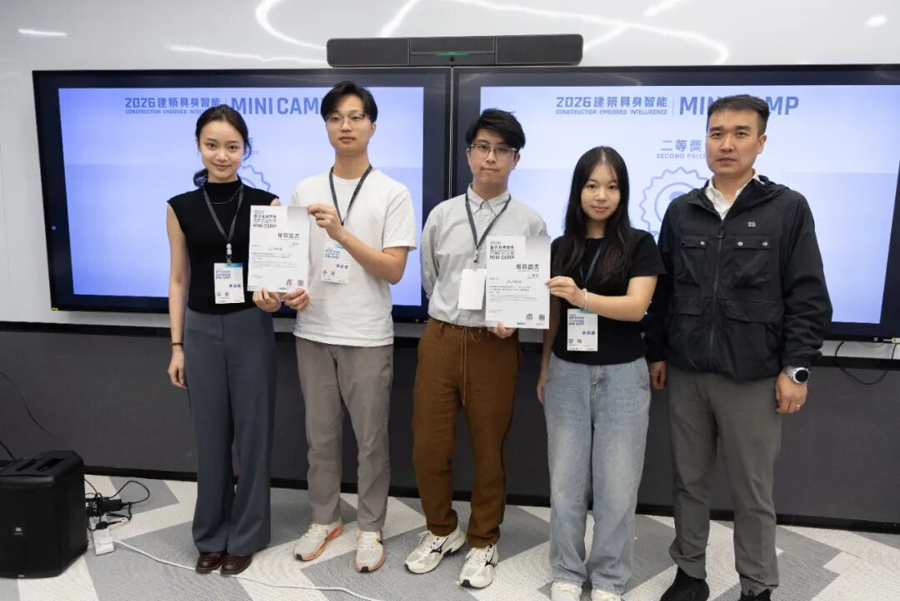
Second Prize | Construction Site Mobile Charging Vehicle: A heavy-load, off-road capable mobile power vehicle with wireless charging, providing "workstation-following" temporary power supply for high-rise construction site workfaces
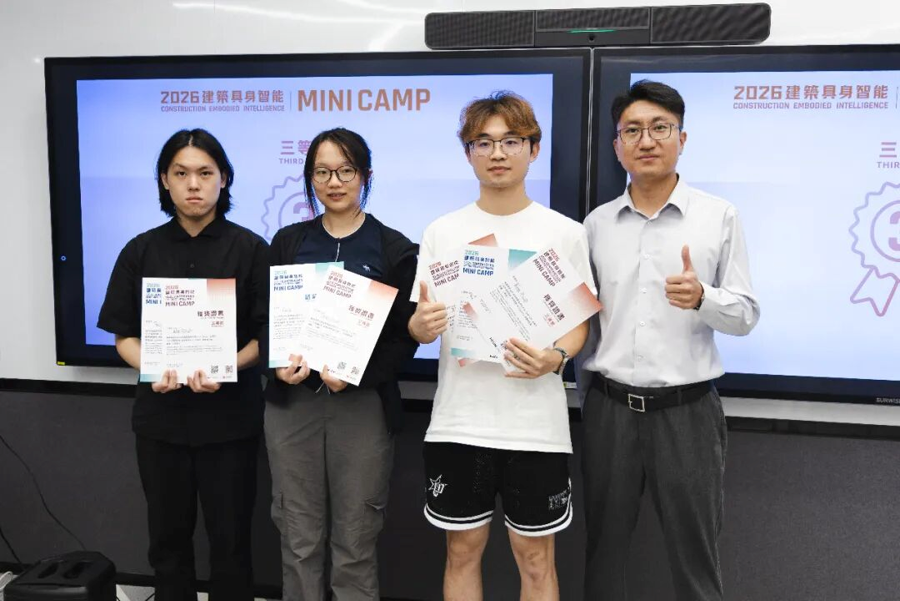
Third Prize | Pippo: An intelligent concrete pipeline cleaning and monitoring system designed to achieve efficient post-construction residual material removal and blockage prevention
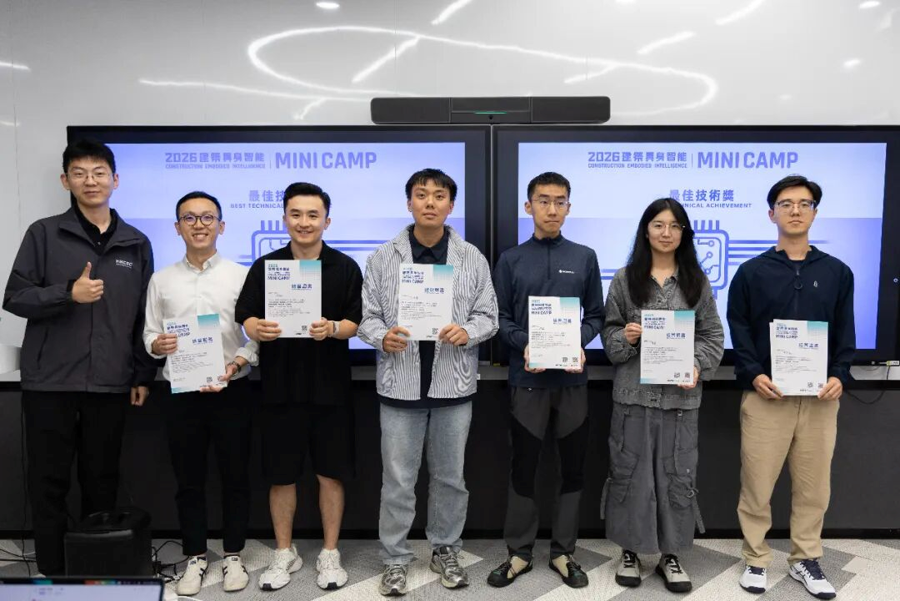
Best Technology Award | SiteFlow Robotics: An automated cross-floor intelligent material transport system connecting horizontal and vertical logistics for construction sites
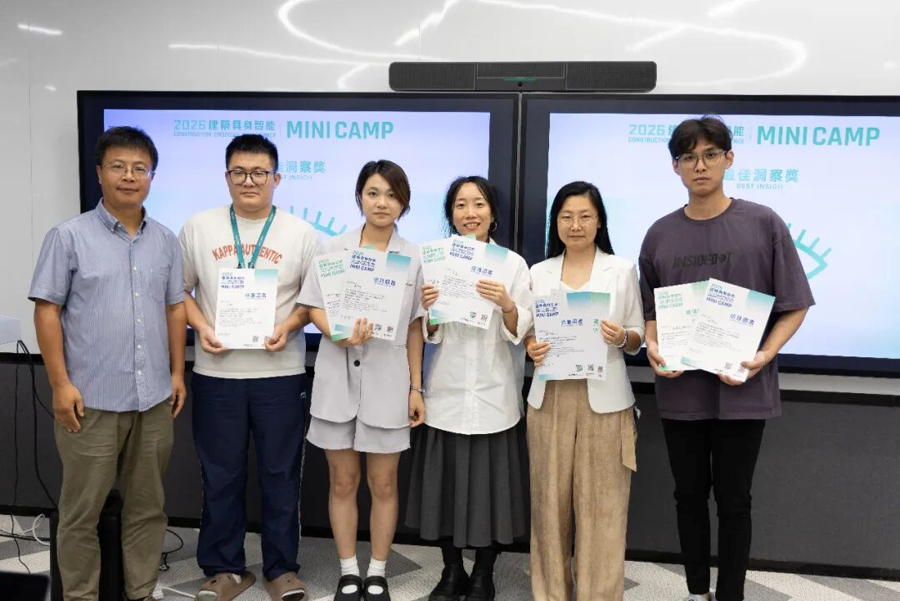
Best Insight Award | Smart Safety Harness: An intelligent height-work safety harness that accurately identifies false-hooking and non-hooking violations, improves wearing comfort, and enables real-time cloud-based early warnings
Best Team Award | MuleBot Multi-Material Unmanned Transport Vehicle: A compact multi-material unmanned transport vehicle designed to enable efficient same-floor horizontal logistics and autonomous delivery on fit-out construction sites
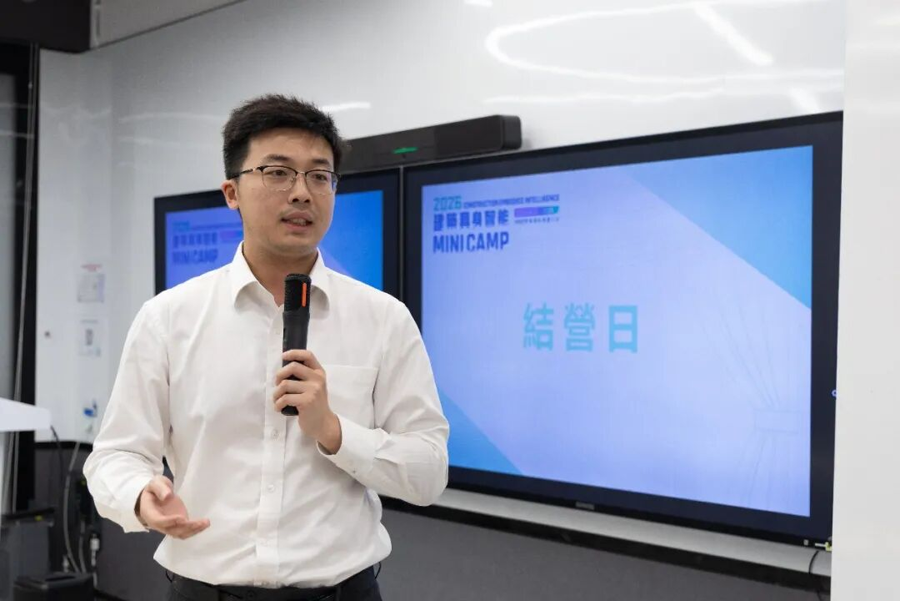
At the camp's conclusion, Yang Jinze conveyed General Manager Shao's closing remarks and next-step arrangements to all participants. General Manager Shao noted that this event marks only the beginning of the overall technology exploration. While the four-day timeframe was short and did not yet include deep research or prototype development—the core subsequent phases—the professionalism, execution capability, and enthusiasm demonstrated by participants during site observations and project advancement had been thoroughly validated.
Going forward, CSCEC Hong Kong will continue to support the business and technical advancement of current R&D projects, existing exploratory directions, and new initiatives, while establishing a regular liaison mechanism with HKCRC to ensure that participants' needs are promptly addressed and effectively connected through dedicated communication channels.
Maral Shashkenova:
"It has been an incredibly valuable experience, and I have learned so much over these days. I was especially impressed by the motivation, expertise, and energy of all the participants. It was a pleasure meeting and learning from everyone."
Guo Yuxuan:
"Overall, I experienced a true rapid iteration process: from an initially misguided direction, gradually converging toward a more focused, higher-frequency pain point. Along the way, I met many outstanding peers—my teammates were incredibly supportive, and our ideas kept colliding. For example, I tend to think from a design perspective, while teammates with mechanical engineering backgrounds focused more on technical implementation. It was only through ongoing exchange and磨合 that we arrived at the final product form."
Yang Chenlu:
"These four days helped me truly understand that 'Technology → Product' is not just a slogan, but a complete process—from the field, to users, to engineering validation. At the same time, collaborating with teammates from different disciplinary backgrounds opened my eyes to many perspectives I had previously overlooked."
Though the four-day journey has concluded, the exploration of embodied intelligence in construction is just beginning.
As a cornerstone of traditional industry, the digital and intelligent transformation of construction is no overnight feat. Young changemakers from diverse backgrounds measured scenarios with their steps, unearthed pain points through interviews, and transformed seemingly minor site challenges into tangible product directions.
HKCRC and CSCEC Hong Kong will continue to nurture these innovation seeds sprouting from the camp's soil, accompanying them as they take root and grow within the incubation ecosystem, reaching toward broader construction scenarios—and eventually maturing into towering trees that drive the industry toward an intelligent, safe, and efficient future!



Get In Touch
Have questions or want to explore collaboration? Reach out to our team and let’s build the future of construction together.